The foods richest in magnesium are pumpkin seeds (156 mg per ounce), cooked spinach (156 mg per cup), quinoa (118 mg per cooked cup), chia seeds (111 mg per ounce), and Brazil nuts (about 107 mg per ounce). Most adults need 310 to 420 mg daily, and roughly half of Americans fall short.
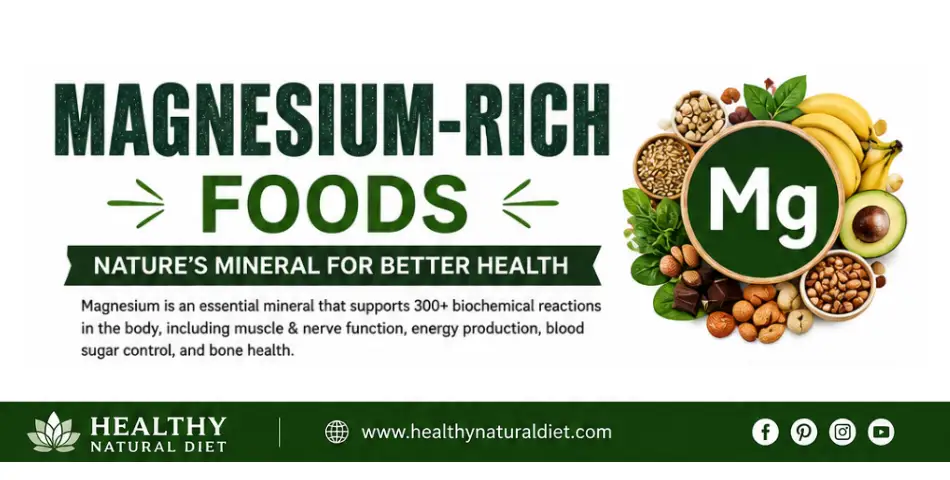
That shortfall matters more than most nutrient gaps. Magnesium works as a cofactor in over 300 enzyme systems, running everything from muscle contractions and nerve signals to blood sugar regulation and bone maintenance. Your body can’t make it. Food has to deliver it, every day.
The good news: closing the gap doesn’t require supplements or exotic ingredients. It requires knowing which foods actually move the needle, which is where most lists go wrong. Rankings built on 100 g portions make chia seeds look like a cheat code, but nobody eats 100 g of chia. Every number below uses a serving a normal person actually eats, drawn from the NIH Office of Dietary Supplements and USDA food data.
How Much Magnesium Do You Need Per Day?
Adult women need 310 to 320 mg of magnesium daily, and adult men need 400 to 420 mg, with pregnancy pushing requirements slightly higher. Despite those modest targets, national survey data (NHANES 2013 to 2016) found that about 48% of Americans consume less than their estimated requirement.
You won’t necessarily feel a moderate shortfall, because your body buffers blood levels by pulling magnesium from bone. That’s exactly why the gap deserves attention: the borrowing has a cost you don’t see for years.
What Foods Are Highest in Magnesium?
Here are 20 magnesium rich foods in three tiers, ranked by content per realistic serving.
Tier 1: The powerhouses (100+ mg per serving)
| Food | Serving | Magnesium | % Daily Value |
|---|---|---|---|
| Pumpkin seeds, roasted | 1 oz (28 g) | 156 mg | 37% |
| Spinach, cooked | 1 cup | 156 mg | 37% |
| Quinoa, cooked | 1 cup | 118 mg | 28% |
| Chia seeds | 1 oz (28 g) | 111 mg | 26% |
| Brazil nuts | 1 oz (28 g) | 107 mg | 25% |
Pumpkin seeds top nearly every credible ranking, and they earn it: more than a third of your daily value in one small handful, alongside 8.5 g of plant protein. We covered them in depth in our guide to pumpkin seeds benefits.
Spinach makes the same tier through concentration of a different kind. Cooking collapses a mountain of leaves into a cup, and the magnesium comes along; raw spinach delivers only about a fifth as much per cup. Quinoa is the sleeper here, a complete-protein grain that quietly outscores almost every nut.
One caution on Brazil nuts: their selenium content is so high that more than a few nuts daily can exceed safe selenium limits. Treat them as a two-nut habit, not a snack bowl.
Tier 2: Strong everyday sources (50 to 99 mg per serving)
| Food | Serving | Magnesium | % Daily Value |
|---|---|---|---|
| Mackerel, cooked | 3.5 oz (100 g) | 97 mg | 23% |
| Almonds, dry roasted | 1 oz (28 g) | 80 mg | 19% |
| Swiss chard, cooked | ½ cup | 75 mg | 18% |
| Cashews, dry roasted | 1 oz (28 g) | 74 mg | 18% |
| Dark chocolate (70%+) | 1 oz (28 g) | 65 mg | 15% |
| Soymilk | 1 cup | 61 mg | 15% |
| Black beans, cooked | ½ cup | 60 mg | 14% |
| Avocado | 1 medium | 58 mg | 14% |
| Edamame, cooked | ½ cup | 50 mg | 12% |
This tier is where a real diet gets built. No single item covers you, but stack two or three across a day and you’re most of the way home. Yes, dark chocolate genuinely belongs here: 65 mg per ounce, provided you choose 70% cocoa or higher, where the sugar stays low enough for the trade to make sense.
Mackerel deserves a special mention as the strongest animal source on the list. Most meat and fish run low in magnesium, which is one reason plant-forward eaters often out-consume omnivores on this particular mineral.
Tier 3: The budget heroes (under 50 mg per serving)
| Food | Serving | Magnesium | % Daily Value |
|---|---|---|---|
| Peanut butter, smooth | 2 tbsp | 49 mg | 12% |
| Baked potato, with skin | 3.5 oz (100 g) | 43 mg | 10% |
| Brown rice, cooked | ½ cup | 42 mg | 10% |
| Flaxseed, whole | 1 tbsp | 40 mg | 10% |
| Banana | 1 medium | 32 mg | 8% |
| Salmon, cooked | 3 oz (85 g) | 26 mg | 6% |
Don’t let the smaller numbers fool you. These are the cheapest magnesium per dollar in the grocery store, and they show up in meals you’re already eating. A peanut butter sandwich on whole grain bread with a banana delivers over 80 mg before you’ve thought about nutrition at all. The skin is doing the work on that potato, so eat it.
Why Does Magnesium Matter So Much?
Each claim below carries an evidence tag, same as every health article on this site. Human data means outcomes measured in people. Established means the role is settled biochemistry. Early research means promising but unfinished.
Heart health (human data, associations). A dose-response meta-analysis of 40 prospective studies covering more than a million participants linked every additional 100 mg of daily dietary magnesium to a 22% lower risk of heart failure and a 7% lower risk of stroke. Association, not proof of cause, but the dose-response pattern across a million people is hard to dismiss.
Blood sugar regulation (human data, mixed). Magnesium participates directly in insulin signaling, and low magnesium status shows up repeatedly in people with type 2 diabetes. Higher dietary intake tracks with lower diabetes risk in cohort studies; supplement trials show smaller, less consistent effects.
Muscle and nerve function (established). Magnesium regulates muscle contraction and nerve transmission. Run low and the classic result is cramps, twitches, and fatigue, which is why athletes and heavy sweaters should watch intake.
Bone strength (established). More than half of your body’s magnesium lives in bone, where it shapes the mineral matrix and helps regulate the hormones controlling calcium. Calcium and vitamin D get the headlines; magnesium decides how well they work.
Sleep quality (early research). Adequate magnesium is associated with better sleep, and it plays a plausible role in calming the nervous system. Trial evidence remains thin, so consider it a bonus, not a treatment. Magnesium-bearing evening snacks like dates or a few almonds are a pleasant way to hedge the bet.
How Do You Hit Your Magnesium Target in One Day?
Here’s what the targets look like as actual food. No supplements, no strange meals, and the math is right there to check.
A day at ~320 mg (RDA for most women):
| Meal | Food | Magnesium | Running total |
|---|---|---|---|
| Breakfast | Chia pudding: 1 oz chia seeds + 1 cup soymilk | 172 mg | 172 mg |
| Lunch | Burrito bowl with ½ cup black beans + ½ avocado | 89 mg | 261 mg |
| Snack | 1 oz dark chocolate (70%+) | 65 mg | 326 mg ✓ |
A day at ~420 mg (RDA for most men):
| Meal | Food | Magnesium | Running total |
|---|---|---|---|
| Breakfast | 2 tbsp peanut butter on toast + 1 banana | 81 mg | 81 mg |
| Lunch | 1 cup quinoa bowl + ½ cup edamame | 168 mg | 249 mg |
| Snack | 1 oz pumpkin seeds | 156 mg | 405 mg |
| Dinner | Baked potato with skin (as a side) | 43 mg | 448 mg ✓ |
Notice the pattern: one Tier 1 food per day does the heavy lifting, and ordinary meals finish the job. That’s the entire strategy.
What Reduces Magnesium Absorption?
You can eat the right foods and still lose part of the mineral along the way. Four leaks worth plugging:
Cooking water. Magnesium dissolves into water, so boiling vegetables and pouring off the liquid discards a share of it. Steam your greens, or keep the cooking liquid for soup.
Phytates. Whole grains, seeds, and legumes carry phytic acid, which binds some minerals during digestion. Soaking beans and choosing sprouted or fermented grain products (like sourdough) reduces the effect. The foods remain excellent sources; the binding just trims the yield.
High-dose zinc supplements. Very high supplemental zinc interferes with magnesium absorption and balance. Food-level zinc is not a concern.
Certain medications. Long-term proton pump inhibitors (acid reflux drugs) can drive magnesium low, and some diuretics increase losses through urine. Heavy alcohol use depletes it too. If any of those apply to you, it’s a conversation worth having with your doctor.
Do You Need a Magnesium Supplement?
Most people don’t, and food should come first. Whole foods deliver magnesium packaged with fiber, potassium, and protein, with zero risk of overdoing it; there’s no upper limit on magnesium from food, because your kidneys excrete the excess.
Supplements are a different story. The safe upper limit for supplemental magnesium is 350 mg per day, and crossing it commonly brings cramping and diarrhea. If a doctor or dietitian does recommend one (common candidates: older adults, people with kidney or GI disease, heavy alcohol use, or the medication issues above), the better-absorbed forms are magnesium citrate, chloride, and lactate. Magnesium oxide, the cheapest form, absorbs poorly.
Signs of genuinely low magnesium include appetite loss, nausea, and fatigue early on, progressing to numbness, tingling, muscle cramps, and abnormal heart rhythms when deficiency deepens. Those later symptoms warrant a doctor, not a shopping trip.
FAQ
What food is highest in magnesium?
Roasted pumpkin seeds are the most concentrated common food source of magnesium, providing 156 mg per 1 oz (28 g) serving, or 37% of the daily value. Cooked spinach matches that figure per cup. Among everyday staples, quinoa, chia seeds, Brazil nuts, and almonds round out the top tier.
Which fruit is highest in magnesium?
Avocado leads common fruits with about 58 mg of magnesium in a medium fruit (14% of the daily value), followed by bananas at 32 mg each. Dried fruits like figs and dates contribute smaller amounts per serving. Fruit alone won’t cover your needs, but it adds up alongside seeds, beans, and greens.
How can I raise my magnesium level quickly?
The fastest food-first approach is stacking Tier 1 sources: an ounce of pumpkin seeds (156 mg) plus a cup of cooked spinach (156 mg) covers 74 to 100% of an adult’s daily need in two items. Consistency over weeks matters more than any single day, since your body restores its reserves gradually.
Are magnesium supplements better than food?
No. Food sources carry no overdose risk and come packaged with fiber and other minerals, while supplements above the 350 mg daily limit commonly cause cramping and diarrhea. Supplements make sense mainly for diagnosed deficiency or higher-risk groups such as older adults and people on certain medications, decided with a doctor.
Is dark chocolate really a good source of magnesium?
Yes, with conditions. A 1 oz (28 g) square of dark chocolate provides 65 mg of magnesium, 15% of the daily value, plus iron, copper, and prebiotic fiber. The catch is cocoa percentage: choose 70% or higher, since milk chocolate trades most of the mineral content for sugar.
The Bottom Line
Magnesium rich foods are neither rare nor expensive. One Tier 1 source a day (a handful of pumpkin seeds, a cup of cooked spinach, a bowl of quinoa) plus ordinary meals built on beans, nuts, whole grains, and the occasional square of dark chocolate will carry most people to their full 310 to 420 mg without a supplement in sight.
Steam your greens instead of boiling them, keep the skin on your potatoes, and let the running-total tables above prove how reachable the target is. Half of Americans miss this mineral. You now have no reason to be one of them.
This article is for general information and is not a substitute for personalized advice from a qualified healthcare professional. If you suspect a deficiency or take medications that affect magnesium, talk with your doctor or a registered dietitian.

is a registered dietitian with over 15 years of experience in nutrition, personalised diet planning, and wellness coaching. She holds a Master’s degree in Nutritional Science from University of Dhaka and specialises in evidence-based nutrition strategies that support long-term health and sustainable lifestyle changes. Mounota regularly writes research-backed health and nutrition content for online publications and wellness platforms.
Leave a Reply