Pumpkin seeds are one of the most nutrient-dense snacks you can eat. A 28 g (1 ounce) serving delivers about 8.5 g of plant protein, 156 mg of magnesium (37% of your daily value), and 2.2 mg of zinc, wrapped in mostly unsaturated fat. Research links them to heart, blood sugar, prostate, and immune support.
You’ve probably scooped them out of a Halloween pumpkin and tossed them straight in the trash. Most of us have. But those little green seeds, sold on labels as pepitas, deserve a far better fate than the compost bin. They come from Cucurbita pepo, a plant cultivated in Mexico for thousands of years, and modern nutrition research keeps confirming what older food traditions seemed to know all along.
As a dietitian, I hold food claims to the same standard here as everywhere else on this site: each benefit below carries an evidence tag. Human trials means tested in people. Early research means lab, animal, or very small human studies. Established nutrition means the benefit follows directly from nutrients the seeds measurably contain.
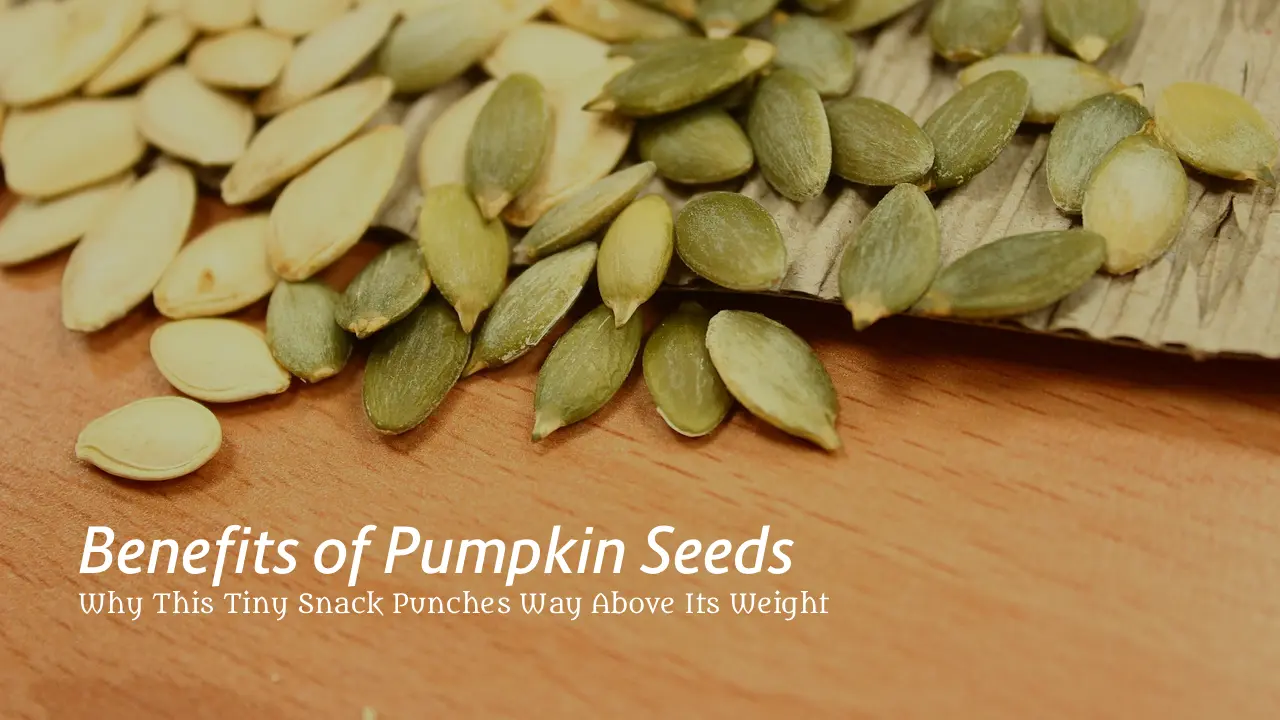
Are Pumpkin Seeds Good for You?
Yes, and the numbers make the case better than adjectives can. Per USDA data, a 28 g serving of hulled, roasted pumpkin seeds provides:
| Nutrient | Per 28 g (1 oz) | % Daily Value (approx.) |
|---|---|---|
| Calories | 163 kcal | |
| Protein | 8.5 g | 17% |
| Total fat | 13.9 g (mostly unsaturated) | |
| Carbohydrates | 4.2 g | |
| Fiber | 1.8 g (about 5 g if in shell) | 6% |
| Magnesium | 156 mg | 37% |
| Zinc | 2.2 mg | 20% |
| Iron | 2.3 mg | 13% |
| Phosphorus | 332 mg | 27% |
| Copper | 0.36 mg | 40% |
Two things stand out. First, the mineral column: magnesium, zinc, and copper at these levels are rare in any food, let alone a shelf-stable snack. Second, that fiber figure changes dramatically with the shell. Whole in-shell seeds carry roughly 5 g of fiber per ounce, while hulled pepitas hold under 2 g. Worth knowing before you pay extra for either.
8 Health Benefits of Pumpkin Seeds
1. A serious source of complete plant protein
Evidence: established nutrition.
At 8.5 g per ounce, pumpkin seeds out-protein almost every other seed and most nuts. The protein is complete, supplying all nine essential amino acids, with overall quality comparable to soy. For vegetarians and vegans, that makes a scattered handful over salad, yogurt, or a grain bowl a genuinely efficient upgrade, not just crunch.
One honest footnote: the amino acids tryptophan and methionine run relatively low in pumpkin seed protein. Pair the seeds with legumes or grains across the day and the profile rounds out on its own.
2. They support heart health
Evidence: established nutrition, with early direct research.
About 75% of the fat in pumpkin seeds is mono- and polyunsaturated, the types associated with better cholesterol profiles when they replace saturated fat. The seeds also carry phytosterols, plant compounds that compete with cholesterol for absorption, plus vitamin E and other antioxidants that limit the inflammation that strains blood vessels over time.
Then there’s the magnesium, which regulates blood pressure and heart rhythm directly. Direct trials of pumpkin seeds on heart outcomes remain small, so the tag stays honest. But every ingredient in the mechanism is well established. See our guide to heart healthy foods for how they fit a wider pattern.
3. One of the best food sources of magnesium
Evidence: established nutrition.
This deserves its own entry because the shortfall is so common. Most adults consume less magnesium than recommended, and the mineral participates in over 300 processes in the body, from muscle and nerve function to blood sugar regulation and bone maintenance.
One ounce of pumpkin seeds restores 37% of your daily value in a single snack. Very few foods can match that; check our list of magnesium rich foods and you’ll see how short it is. If you fix only one nutrient gap with pumpkin seeds, it will probably be this one.
4. They may help with blood sugar control
Evidence: early research.
Three properties work in the same direction here. The fiber and fat slow digestion, blunting the glucose spike from a meal. The magnesium supports insulin function, and low magnesium status shows up repeatedly in people with type 2 diabetes. And with just 4 g of carbohydrate per serving, the seeds barely register on blood sugar themselves.
Human trials specific to pumpkin seeds are still small, so treat them as a sensible addition rather than a fix. If you manage type 2 diabetes, fold them into your plan with your doctor rather than around it.
5. They may ease prostate and urinary symptoms
Evidence: human trials, mixed results.
This traditional use has attracted real clinical research. In a 2021 randomized trial of 73 men with benign prostatic hyperplasia (BPH), 360 mg of pumpkin seed oil twice daily significantly improved urinary symptom scores and quality of life over 3 months, with zero reported side effects, though the prescription drug tamsulosin worked faster. A separate pilot study of 60 men found a daily oil-free pumpkin seed extract reduced symptom scores over 3 months.
The full picture is messier: a 2022 meta-analysis of two 12-month placebo-controlled trials found benefit in one study and none in the other. Note too that these trials used concentrated extracts and oils, not a handful of seeds. The zinc connection is real (the prostate concentrates zinc heavily), but if urinary symptoms are affecting your life, see a urologist first and treat the seeds as support.
6. They give your immune system real materials
Evidence: established nutrition.
Zinc is the headline: 20% of your daily value per ounce, feeding a mineral your immune cells need to develop, signal, and heal wounds. Even mild zinc shortfall measurably weakens immune response, and plant-forward eaters are among the most likely to run low.
The seeds back it up with vitamin E and antioxidant carotenoids that limit the cell damage wearing your defenses down. A handful won’t replace sleep or a varied diet, and we won’t pretend otherwise. It’s one quiet contributor among several; the bigger picture lives in our guide on how to boost your immune system.
7. They may support sleep, mostly through magnesium
Evidence: early research, honestly framed.
You’ll read elsewhere that pumpkin seeds help you sleep because of tryptophan, the amino acid your body converts to serotonin and melatonin. Here’s the fuller story: a serving contains roughly 160 mg of tryptophan, while the studies showing better sleep used doses of about 1 g, which would take six servings. Pumpkin seed protein is actually on the low side for tryptophan among seeds.
The stronger mechanism is magnesium, which calms the nervous system and is linked with better sleep quality when intake is adequate. An evening handful is a pleasant, low-effort habit that nudges you toward that adequacy. Just don’t expect a sleeping pill.
8. They support digestion and satiety
Evidence: established nutrition.
The fiber keeps things moving, supports regularity, and feeds gut bacteria, with in-shell seeds delivering nearly triple the dose of hulled ones. Meanwhile the combination of protein, fat, and fiber slows stomach emptying, which is why a small handful holds off snack cravings far longer than its size suggests.
Ease in if you’re new to them. A large amount of seed fiber in one sitting can cause bloating in people who aren’t used to it.
How Do You Eat Pumpkin Seeds?
The best version is the boring one: plain, dry-roasted, unsalted. From there:
Straight from the bowl as an everyday snack. On top of things: salads, soups, oatmeal, yogurt. Blended in: smoothies, granola, baked goods. In savory cooking: grain bowls, roasted vegetables, or ground into sauces the way Mexican kitchens have used pepitas for centuries.
To roast your own from a fresh pumpkin, rinse the seeds, dry them well, toss with a little oil, and roast at 300°F (150°C) for 20 to 30 minutes. Lower, slower roasting protects the unsaturated fats better than high heat.
Who Should Be Careful With Pumpkin Seeds?
Most people tolerate them well, with four caveats worth knowing. Salted commercial versions can carry serious sodium, so check labels if seeds become a daily habit. At 163 calories per ounce, mindless bag-grazing adds up quickly; portion them out. Pumpkin seeds contain moderate oxalates, around 15 mg per ounce, which matters if you’ve been advised to follow a low-oxalate diet for kidney stones. And a known seed allergy obviously rules them out.
As with any single food, they work as part of a varied diet, not as a standalone fix. If you take medication or manage a condition, a quick word with your doctor or a registered dietitian settles how they fit.
FAQ
How many pumpkin seeds should you eat a day?
About 28 g (1 ounce), a small handful, is the serving used in most nutrition research and gives you 37% of your daily magnesium and 20% of your zinc for 163 calories. There’s no danger in eating more, but the calories climb fast, so daily eaters do best measuring rather than grazing.
Are pumpkin seeds good for men?
Pumpkin seeds have specific relevance for men’s health. Clinical trials of pumpkin seed oil and extracts showed improved urinary symptoms in men with benign prostate enlargement, though results are mixed across studies. Their zinc, at 20% of the daily value per ounce, also supports testosterone production and sperm quality.
Is it better to eat pumpkin seeds raw or roasted?
Both are nutritious, and the mineral content survives roasting essentially intact. Light roasting at or below 300°F (150°C) improves flavor and digestibility while protecting the unsaturated fats; very high heat degrades them. The version to limit is heavily salted commercial seeds, where sodium piles up quickly.
Do pumpkin seeds help you sleep?
Modestly, and probably through magnesium rather than the tryptophan they’re marketed on. A serving holds around 160 mg of tryptophan, well below the 1 g doses studied for sleep. Magnesium’s link to sleep quality is better supported, and pumpkin seeds are one of the richest food sources available.
Can you eat pumpkin seed shells?
Yes, whole pumpkin seeds with shells are safe for most people and nearly triple the fiber, about 5 g per ounce versus under 2 g hulled. The trade-off is a tougher chew and more digestive load. People with digestive conditions like diverticulitis are often advised to stick with hulled seeds.
The Bottom Line
Pumpkin seeds are proof that good nutrition doesn’t have to be complicated or expensive. One small serving covers more than a third of your daily magnesium, a fifth of your zinc, and 8.5 g of complete plant protein, with human trials behind the prostate benefit and solid mechanisms behind the rest. This article grades each claim so you know which ones stand on trial evidence and which are still earning it.
So next time you carve a pumpkin, save the seeds. Or just grab a bag of plain pepitas on your next grocery run. Your body will get more from that handful than you’d ever guess from its size.
This article is for general information and is not a substitute for personalized advice from a qualified healthcare professional. If you have specific health concerns or dietary questions, talk with your doctor or a registered dietitian.
Sources
- Healthline – Top 11 Science-Based Health Benefits of Pumpkin Seeds
- Cleveland Clinic – The Health Benefits of Pumpkin Seeds

is a registered dietitian with over 15 years of experience in nutrition, personalised diet planning, and wellness coaching. She holds a Master’s degree in Nutritional Science from University of Dhaka and specialises in evidence-based nutrition strategies that support long-term health and sustainable lifestyle changes. Mounota regularly writes research-backed health and nutrition content for online publications and wellness platforms.
Leave a Reply