The best foods for your heart are fatty fish, oats, walnuts, extra virgin olive oil, leafy greens, berries, and beans. Each targets a specific risk factor: soluble fiber lowers LDL cholesterol, potassium-rich produce lowers blood pressure, and omega-3 fats cut triglycerides. Consistent eating patterns beat any single superfood.
Heart disease remains the leading cause of death in the United States, and diet sits near the center of almost every risk factor you can control: blood pressure, LDL cholesterol, triglycerides, blood sugar, and inflammation. That’s the bad news. The good news is that food works on all five, and the research on which foods do what has gotten remarkably specific.
Most lists hand you fifteen foods and a vague promise. This one is organized differently. Each food below is grouped by the lever it pulls, tagged by evidence strength (human trials, human data from large observational studies, or early research), so you can build a plate that targets your numbers, not someone else’s.
What Makes a Food Heart Healthy?
A food earns the label by improving at least one measurable risk factor: lowering LDL cholesterol, reducing blood pressure, cutting triglycerides, or calming chronic inflammation. The strongest proof belongs to eating patterns, not single items. The DASH diet has been shown in trials to lower both blood pressure and LDL cholesterol, and the Mediterranean pattern carries landmark trial evidence behind it.
Keep that hierarchy in mind as you read. No single food below will rescue a diet built on processed meat and soda. Stack several of them daily, though, and you are quietly rebuilding the pattern those trials tested.
The Numbers That Matter for Your Heart
Before the foods, the targets they add up to. These five figures do most of the work:
| Target | The number | Why it matters |
|---|---|---|
| Sodium | Under 2,300 mg/day (AHA calls 1,500 mg ideal) | Excess sodium raises blood pressure, the biggest single risk factor |
| Soluble fiber | 5 to 10 g/day | Binds cholesterol in the gut and lowers LDL |
| Fish | 2 servings/week | Omega-3s lower triglycerides and support heart rhythm |
| Saturated fat | Replace with unsaturated | Swapping, not just cutting, is what improves cholesterol |
| Added sugar | As low as practical | Drives triglycerides and weight gain |
One stat worth pinning to your fridge: roughly 70% of the sodium Americans eat comes from processed and restaurant foods, not the salt shaker. Cooking at home is a blood pressure intervention before you’ve chosen a single ingredient.
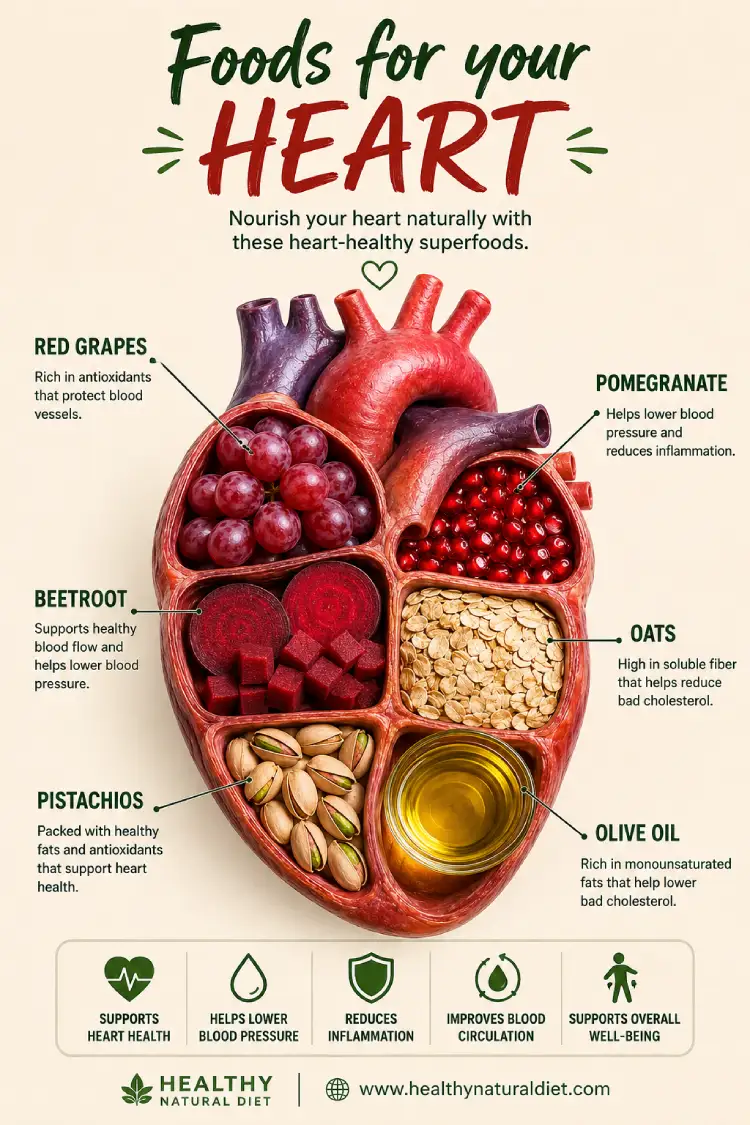
Foods That Lower Cholesterol
1. Oats and barley
Evidence: human trials, with an FDA-recognized health claim.
Oats earn the top spot on paper strength alone. Their soluble fiber, beta-glucan, forms a gel in your gut that traps cholesterol-rich bile acids and carries them out, forcing your liver to pull LDL from your blood to make more. The effect is reliable enough that the FDA formally recognizes a heart disease risk claim for 3 g of beta-glucan daily, roughly a bowl and a half of oatmeal, as part of a diet low in saturated fat. Barley works the same way. Skip the sugary instant packets; plain oats, your own toppings.
2. Beans and lentils
Evidence: human trials.
Beans pull the same soluble-fiber lever as oats and add a second one: they replace meat. Every time lentils or black beans stand in for red or processed meat, you subtract saturated fat while adding fiber, plant protein, potassium, and magnesium. Trials consistently show modest LDL reductions from regular legume eating, and the cost per serving embarrasses every other food on this list.
3. Walnuts and other nuts
Evidence: human trials.
A small daily handful of nuts, around an ounce, lowers LDL cholesterol in trial after trial, and walnuts stand out for their plant omega-3 (alpha-linolenic acid). Nuts are calorie-dense, which scares people off, yet studies keep finding nut eaters gain no extra weight, likely because that handful kills snack cravings that would have been chips. Unsalted matters; the sodium math above still applies.
4. Flaxseed and other seeds
Evidence: human trials for flax; established nutrition for the rest.
Ground flaxseed brings soluble fiber, plant omega-3s, and lignans in one spoonful, and trials link it to modest reductions in both LDL and blood pressure. Buy it ground or grind it yourself; whole flax mostly passes through undigested. Chia and pumpkin seeds ride the same cart, with pumpkin seeds doubling as one of the richest magnesium sources you can eat. We covered them fully in our guide to pumpkin seeds benefits.
5. Soy foods: edamame, tofu, soymilk
Evidence: human trials, modest effect.
Soy protein lowers LDL a few percentage points on its own, and like beans, its bigger contribution is what it displaces from the plate. A stir-fry built on tofu instead of fatty beef changes your saturated fat intake for the day, not just your cholesterol panel next quarter. Choose unsweetened soymilk; several brands carry surprising added sugar.
Foods That Lower Blood Pressure
6. Leafy greens
Evidence: human data.
Spinach, kale, chard, and arugula deliver dietary nitrates, which your body converts to nitric oxide, a compound that relaxes and widens blood vessels. Studies link a daily serving of greens to lower blood pressure and better blood flow. They also carry potassium, magnesium, and calcium, the DASH diet’s mineral trio.
One safety note most lists skip: if you take warfarin, the goal with vitamin K rich greens is consistency, not avoidance. Eat a similar amount daily so your dose stays matched, and coordinate with your doctor.
7. Avocado
Evidence: human data.
One avocado carries more potassium than a banana, wrapped in monounsaturated fat that improves cholesterol when it replaces butter or mayo. Regular avocado eaters show better cholesterol profiles and lower cardiovascular risk in large cohort studies. Half a fruit on toast instead of butter pulls two levers in one breakfast.
8. Tomatoes
Evidence: human data.
Tomatoes are the main dietary source of lycopene, an antioxidant linked in studies to lower cholesterol and blood pressure. The practical twist: cooked tomatoes release more lycopene per serving than raw, which promotes humble tomato sauce and canned tomatoes (choose low sodium) into legitimate heart food. Potassium comes along for the ride.
9. Garlic
Evidence: human trials, small effect.
Garlic gets overhyped and underused at the same time. Trials of garlic and aged garlic extract show real but modest blood pressure reductions, nothing like medication. Its quieter value is culinary: garlic, herbs, citrus, and vinegar are how you make low-sodium food taste like food, which is the hardest part of any blood pressure diet.
Foods That Protect the Whole System
10. Fatty fish: salmon, sardines, mackerel
Evidence: human trials.
The omega-3 fats EPA and DHA lower triglycerides, ease blood pressure slightly, and support stable heart rhythm, which is why the standing recommendation is two servings of fatty fish per week. Canned sardines and salmon count fully, cost a fraction of fresh fillets, and sit in the pantry until needed. If a tin of sardines on crackers replaces a deli sandwich, you’ve cut processed meat and added omega-3s in the same lunch.
11. Extra virgin olive oil
Evidence: human trials, landmark.
This is the food with the most famous trial behind it. In the Spanish PREDIMED study, high-risk adults following a Mediterranean diet enriched with olive oil or nuts experienced roughly 30% fewer major cardiovascular events than the comparison group. Olive oil’s job is substitution: it goes where butter went. Sauté in it, dress salads with it, and let the polyphenols and monounsaturated fat do slow, unglamorous work.
12. Berries
Evidence: human data.
Blueberries, strawberries, and raspberries concentrate anthocyanins, antioxidant pigments tied to lower blood pressure and reduced heart disease risk in long-running cohort studies; regular moderate blueberry intake specifically tracks with fewer cardiovascular events. Frozen berries carry the same compounds at half the price, all year. Dessert that works for you instead of against you.
13. Whole grains beyond oats
Evidence: human data.
Replacing refined grains with whole ones (brown rice, quinoa, whole wheat bread, bulgur) is repeatedly associated with lower coronary heart disease risk. The fiber steadies blood sugar and cholesterol; the intact grain brings magnesium and B vitamins that white flour lost at the mill. The label to trust says “100% whole grain,” not “multigrain,” which promises nothing.
14. Dark chocolate
Evidence: human data, moderation required.
Cocoa flavanols are linked to better blood vessel function and modestly lower blood pressure, and observational studies associate moderate dark chocolate intake with lower heart disease risk. The dose makes the medicine: an ounce of 70%+ cocoa a few times a week, not a nightly bar. Below 70%, you’re mostly buying sugar with a health halo.
15. Green tea
Evidence: human data, modest.
Green tea’s catechins are associated with small reductions in LDL cholesterol and blood pressure across studies. The effect is real and unspectacular, which is fine, because the swap is the point: every cup of green tea that replaces a sweetened soda removes 30 to 40 g of added sugar from the day. That trade does more than the catechins do.
Smart Swaps: Small Changes, Real Levers
You don’t overhaul a diet. You swap one thing, keep it for a month, then swap another.
| Instead of | Choose | The lever it pulls |
|---|---|---|
| Butter on the pan | Extra virgin olive oil | Replaces saturated fat, improves LDL |
| Deli meat sandwich | Canned sardines or a bean wrap | Cuts sodium and processed meat, adds omega-3s or fiber |
| Chips at your desk | An ounce of unsalted nuts | Cuts sodium, adds LDL-lowering fats |
| Sugary breakfast cereal | Oatmeal with berries and flax | 3 g beta-glucan toward the FDA claim threshold |
| Soda or sweet tea | Green tea or sparkling water | Removes 30+ g added sugar per swap |
| White rice most nights | Brown rice, quinoa, or barley | Whole-grain fiber, magnesium, steadier blood sugar |
What Should You Limit for Heart Health?
Four things do most of the damage. Sodium, hiding in processed and restaurant food far more than in your salt shaker. Saturated and trans fats, mainly from fatty and processed meats, butter, and commercial baked goods; the fix is replacement with unsaturated fats, not fat avoidance. Added sugar, especially drinkable sugar, which drives triglycerides hard. And ultraprocessed foods generally, which bundle all three problems into convenient packaging.
Then there’s alcohol, where the story has changed. The romantic idea of heart-protective red wine has not survived modern evidence review, and the American Heart Association’s current position is blunt: if you don’t drink, don’t start, and if you do, keep it limited. Whatever benefit the old studies saw likely belonged to the lifestyle around the wine, not the glass.
If you’re also managing blood sugar, nearly everything above pulls double duty; our type 2 diabetes guide covers the overlap. And for the mineral side of blood pressure, potassium and magnesium rich foods like dates, greens, and seeds are mapped serving by serving in our magnesium rich foods guide.
FAQ
What are the 3 best foods for your heart?
If forced to pick three: fatty fish like salmon or sardines (omega-3s that lower triglycerides, two servings weekly), oats (beta-glucan fiber with an FDA-recognized cholesterol claim), and walnuts (consistent LDL reductions in trials plus plant omega-3s). Together they cover the three biggest dietary levers on heart risk.
Which fruit is best for the heart?
Berries lead the fruit category. Blueberries and strawberries concentrate anthocyanins, and regular moderate intake is associated with lower blood pressure and reduced cardiovascular risk in long-term studies. Avocado, technically a fruit, deserves a shared podium for its potassium and cholesterol-improving monounsaturated fat. Frozen berries count fully.
Is red wine actually good for your heart?
Current evidence says no, not reliably. The apparent benefits in older studies are now largely attributed to the healthier lifestyles of moderate wine drinkers rather than the wine. The American Heart Association’s position is that people who don’t drink shouldn’t start for heart reasons, and drinkers should limit intake.
What are the worst foods for your heart?
Processed meats (bacon, sausage, deli meats) combine sodium, saturated fat, and preservatives in one package and show the strongest consistent link to heart disease. Sugary drinks, trans fats in some commercial baked goods, and heavily salted ultraprocessed snacks round out the short list. Frequency matters more than any single indulgence.
How quickly can diet changes improve heart health?
Faster than most people expect. Blood pressure can respond to a DASH-style pattern within a few weeks, and LDL cholesterol typically shifts within one to two months of consistent soluble fiber and fat swaps. Triglycerides react quickly to cutting added sugar and alcohol. Ask your doctor to recheck your numbers after about three months.
The Bottom Line
Your heart doesn’t need superfoods. It needs a pattern: oats or whole grains most mornings, beans or fish where meat used to be, olive oil where butter was, greens and berries filling the gaps, nuts instead of packaged snacks, and sodium kept honest by cooking at home. Every food above earns its place by moving a number your doctor actually measures.
Pick one swap from the table and run it for a month. Then pick another. That’s the entire program, and unlike most heart advice, it tastes like dinner.
This article is for general information and is not a substitute for personalized medical advice. If you have heart disease, high blood pressure, high cholesterol, or take medications such as blood thinners or statins, work with your doctor or a registered dietitian before making major dietary changes.

Janice Thompson is a wellness enthusiast with a passion for helping others lead healthy and fulfilling lives. With a background in nutrition and a love for cooking, Janice has dedicated her career to sharing tips and tricks for living a healthy lifestyle and maintaining a balanced diet.
Leave a Reply