Tomatoes are worth eating for three reasons that hold up well under scrutiny: they are rich in potassium and vitamin C, they are the main dietary source of an antioxidant called lycopene, and they deliver all of that for roughly 20 calories a fruit. Where it gets murkier is everything else. Tomatoes get credited with preventing cancer, sharpening memory and boosting fertility, and those claims sit on much shakier ground than the headlines suggest.
So this guide does something most tomato articles skip. It sorts the benefits by how strong the evidence actually is, tells you how much lycopene you get from a fresh tomato compared with a spoon of paste, and answers the questions that usually send you off to a second search: how many is too many, raw or cooked, and whether the nightshade rumour is worth worrying about.
What is in a tomato
One medium raw tomato, around 120 to 125 grams, gives you roughly:
- Calories: 18 to 22
- Water: about 95 percent of the fruit
- Fibre: 1.2 to 1.5 grams
- Vitamin C: about 17 mg, close to a fifth of the daily value
- Potassium: around 292 mg
- Vitamin K: about 10 micrograms
- Folate: about 18 micrograms
None of those numbers is spectacular on its own. A tomato is not a nutritional powerhouse the way liver or spinach is. What makes it interesting is the plant compounds riding alongside the vitamins, and the fact that most people will happily eat tomatoes every single day without being told to.
The main compounds are lycopene, the red pigment that has absorbed most of the research attention, beta carotene, which your body converts into vitamin A, naringenin, a flavonoid concentrated in the skin, and chlorogenic acid. Together they are the reason tomatoes keep appearing in antioxidants research.
The benefits, sorted by how well they are supported
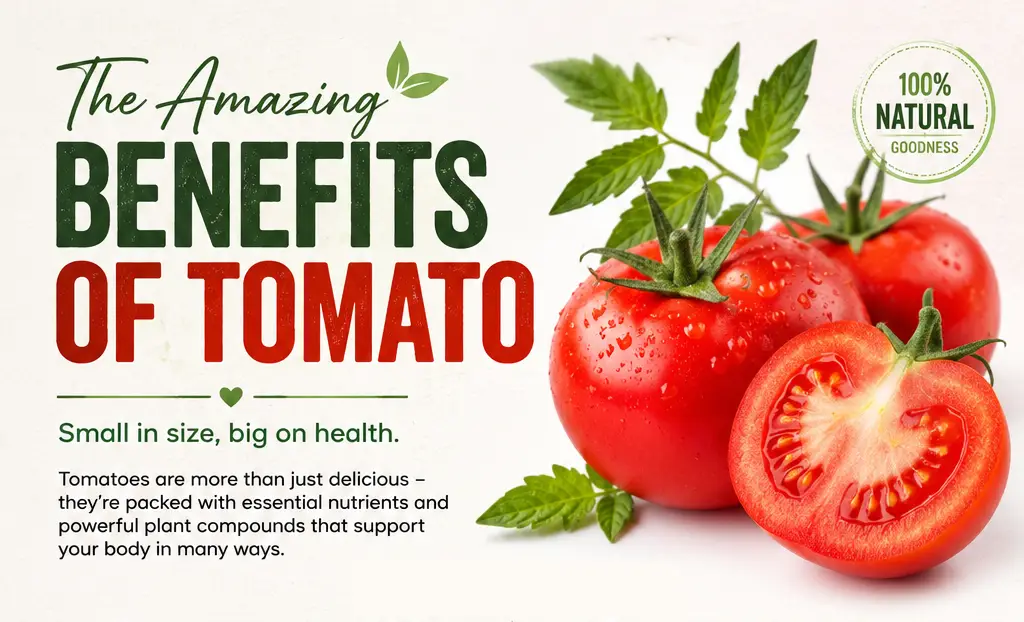
Not all of these claims deserve equal confidence. Here is the honest hierarchy.
Tier one: well supported in humans
Blood pressure support. This one is straightforward nutrition, not lycopene magic. Potassium helps your body handle sodium and relax blood vessel walls, and most people eat far less potassium than they should. A tomato gives you 292 mg. A cup of tomato juice or a bowl of tomato soup pushes that considerably higher. If you are building meals around potassium-foods, tomatoes belong in the rotation.
Cholesterol and heart disease risk. A review pooling 25 trials found that people with high blood levels of lycopene had roughly 14 percent lower heart disease risk. The same body of work compared raw tomatoes, tomato sauce, and tomato sauce with olive oil, and the olive oil version produced the biggest improvement in heart health markers. A separate small trial had 15 people drink tomato juice four days a week for two months, and their LDL cholesterol fell while HDL rose. Fifteen people is not a large study, and the effects are modest rather than dramatic. But the direction is consistent across the literature. Read How to Increase HDL Cholesterol Naturally.
Skin protection against UV damage. This is the one that surprises people. In one study, participants who ate 40 grams of tomato paste with olive oil daily for ten weeks had about 40 percent fewer sunburns. Another found that 8 to 16 mg of lycopene daily for 12 weeks cut the intensity of UV skin redness by 40 to 50 percent. Read that carefully. It means tomatoes give your skin a modest extra layer of defence. It does not mean you can skip sunscreen, and no researcher in the field suggests otherwise.
Low energy density and fullness. A food that is 95 percent water and contains fibre fills space in your stomach without adding much energy. There is nothing clever about it and no fat burning mechanism involved. Swap a cream sauce for a tomato based one and you have cut a meaningful number of calories without cutting the volume of food on your plate.
Tier two: promising, with gaps
Blood sugar. Tomatoes are low in carbohydrate, low on the glycaemic scale, and contribute fibre, all of which makes them a sensible food for anyone watching blood glucose. There is also early work on naringenin and carotenoid intake in relation to insulin sensitivity. What does not yet exist is solid trial evidence that eating more tomatoes changes long term blood sugar control in people with diabetes. Sensible inclusion, yes. Treatment, no.
Gut health. Tomatoes contribute both soluble and insoluble fibre, and there is emerging research on how tomato compounds interact with the gut microbiome. The fibre part is reliable. The microbiome part is a live research area where the human data is still thin. If gut health is the goal, tomatoes help, but they are a supporting player next to beans, oats and other. Read 15 Fiber Rich Foods that Relieve Constipation.
Immune function. Vitamin C is genuinely necessary for immune cells to work properly, and tomatoes supply a decent amount of it. The leap that does not hold is the idea that eating more of it prevents you catching things. Research on vitamin C and colds has been mixed for decades. Meeting your requirement matters. Exceeding it does not appear to buy you much. More on this in our guide How to Boost Your Immune System.
Tier three: interesting, but do not eat tomatoes for this
Cancer risk. This is where tomato content goes furthest beyond the evidence. Population studies do show that people who eat more tomatoes tend to have lower rates of prostate, lung and stomach cancer. But observational data cannot separate the tomato from everything else about a person who eats a lot of vegetables. Much of the mechanistic work on lycopene and cancer cells has been done in test tubes and animals, and cell studies do not translate reliably to human outcomes. Even the clinicians who cite these findings are careful to say the human evidence is not settled. Eat tomatoes because they are good food. Do not eat them as cancer insurance.
Brain and cognitive protection. Real signal, early stage. Lycopene crosses into brain tissue and the antioxidant rationale is plausible, but the human research is largely observational and short term.
Male fertility. One frequently cited study divided 44 men with fertility problems into three groups, one of which drank about seven ounces of tomato juice daily for 12 weeks. That group showed improved sperm motility. Forty four men, one trial. Genuinely interesting, nowhere near enough to make a recommendation from.
Raw or cooked, and why it matters more than you would think
The instinct is that raw is more nutritious. With tomatoes, it depends entirely on which nutrient you care about.
Cooking degrades some vitamin C, which is heat sensitive. But heat breaks down the plant cell walls holding lycopene in place, and it converts lycopene into a form your body absorbs far more readily. Processed tomato products supply over 80 percent of the lycopene in the average Western diet, and it is not simply because people eat more sauce than salad. Gram for gram, the concentrated products carry more.
Here is roughly what different forms deliver:
| Form | Typical lycopene |
|---|---|
| Fresh medium tomato (about 120 g) | 3 to 7 mg |
| Cherry tomatoes, 100 g | 5 to 10 mg |
| Canned chopped tomatoes, 100 g | 5 to 25 mg |
| Tomato juice, 1 cup | 9 to 22 mg |
| Pasta or tomato sauce, half a cup | 15 to 25 mg |
| Tomato paste, 1 tablespoon | 4 to 5 mg |
| Ketchup, 1 tablespoon | about 2 mg |
| Sun dried tomatoes, 1 tablespoon | about 2 mg |
These are ranges for a reason. Lycopene content swings with variety, ripeness, growing conditions and how a manufacturer processed the fruit, so treat the table as a guide rather than a label. For context, the studies that found benefits generally used somewhere between 8 and 21 mg of lycopene a day.
Now the part almost nobody explains. Lycopene is fat soluble, which means it needs fat present in the same meal to be absorbed properly. A plate of sliced tomatoes with nothing on it delivers a fraction of what the same tomatoes deliver roasted in oil. This is exactly why the tomato sauce with olive oil group outperformed the plain sauce group in the heart research, and why the sunburn study used tomato paste with olive oil rather than paste alone.
You do not need much. A drizzle of olive-oil on a tomato salad, a spoonful of oil in the pan when you start a sauce, or simply eating tomatoes alongside cheese, eggs, avocado or nuts is enough. This is also part of why the mediterranean diet keeps performing well in research. Cooked tomatoes, olive oil and garlic is not a health hack. It is just how that part of the world has cooked for centuries.
How many tomatoes should you eat a day?
For most healthy adults, one to two medium tomatoes a day, or the equivalent in cooked products, is a reasonable target and lands you in the range studied for benefits. Half a cup of pasta sauce or a glass of tomato juice counts.
There is no official recommended intake for lycopene, so nobody can hand you a precise number. There is also no reason to force it. If you eat tomatoes four days a week rather than seven, you are fine. The research on dietary patterns consistently shows that consistency over months matters far more than hitting a daily quota.
Going dramatically higher does not scale the benefits up, and at extreme intakes there is a curious limit. Lycopenaemia, a harmless orange discolouration of the skin, has been documented in people consuming enormous quantities. The most cited case involved a woman drinking roughly two litres of tomato juice daily for years. You are unlikely to get anywhere near that by accident.
Who should be careful
Tomatoes are safe for most people. A few groups should pay attention.
If you have reflux or GERD. Tomatoes are among the most consistently reported food triggers for heartburn. Fresh tomatoes sit at a pH of roughly 4.0 to 4.9, and concentrated products like paste, ketchup and marinara can drop to around 3.5. Smaller portions, cooked rather than raw, and not eating them late in the evening all help. Our guide on gerd diet covers the swaps in more detail.
If you take warfarin. Tomatoes contain vitamin K, which affects how the drug works. The advice is not to avoid them but to keep your intake steady rather than swinging between none and lots, and to tell whoever manages your dosing.
If you have kidney disease. Potassium is a benefit for most people and a problem if your kidneys cannot clear it efficiently. Anyone on a potassium restricted diet should be following individual guidance rather than general advice.
If you have a tomato allergy or oral allergy syndrome. True tomato allergy is rare. More common is a cross reaction in people allergic to grass pollen or latex, causing itching or tingling in the mouth. Symptoms usually appear quickly after eating.
On kidney stones, the common fear is largely misplaced. Tomatoes are not a high oxalate food, and there is no good evidence that tomato seeds cause stones. Hydration, sodium intake and stone type matter far more. If you have had oxalate stones, get advice specific to your urine chemistry rather than cutting out a vegetable.
The nightshade and arthritis question
This comes up constantly, so it is worth answering directly. Tomatoes belong to the nightshade family alongside potatoes, aubergines and peppers, and the claim is that these foods aggravate arthritis and inflammation.
Major arthritis organisations and academic medical centres have looked at this and reached the same conclusion: there is no convincing evidence that nightshade vegetables worsen rheumatoid arthritis or any other inflammatory joint condition. Harvard Health puts it plainly, as does Versus Arthritis in the UK. What the evidence does support is the opposite direction, that plant rich dietary patterns are associated with lower inflammation.
That said, individual food intolerances are real. If you have noticed a reliable, repeatable pattern where tomatoes leave you achy, that experience is worth taking seriously and worth discussing with a clinician. It is just not a reason for everyone else to avoid them.
Do ketchup, juice and canned tomatoes count?
Mostly yes, with caveats.
Canned tomatoes are a genuinely good option. They are picked ripe, processed quickly, and the heat treatment makes their lycopene more available. Check the label for added salt and buy the plain version where you can.
Tomato juice delivers real lycopene, but shop bought versions are often heavily salted. Look for low sodium or no added salt.
Ketchup does contain lycopene. The problem is portion size and sugar. A tablespoon gives you about 2 mg alongside a meaningful amount of added sugar. It is a condiment, not a serving of vegetables.
Sun dried tomatoes are concentrated in both directions, high in lycopene and often high in salt and oil. Excellent flavour, small portions.
Passata and tomato paste are the quiet winners. Cheap, shelf stable, concentrated, and they turn into the base of a hundred meals.
Choosing and Storing Them Well
Colour tracks lycopene fairly closely, so the deeper the red, the more you are getting. Pale, out of season supermarket tomatoes are noticeably lower in both flavour and pigment. Green and yellow varieties are lovely to eat but contribute very little lycopene.
Keep whole tomatoes at room temperature rather than in the fridge. Refrigeration halts ripening and dulls flavour, and a tomato that tastes of nothing is a tomato you will not bother eating. Once cut, refrigerate and use within a couple of days. If your tomatoes are underripe, a paper bag on the counter with a banana speeds things along.
When they are close to going over, that is the moment to roast them. Halve them, toss with oil and salt, and put them in a hot oven for half an hour. You get more usable lycopene, better flavour, and nothing goes in the bin.
Frequently asked questions
Is a tomato a fruit or a vegetable?
Botanically a fruit, since it develops from the flower and contains seeds. Culinarily a vegetable, which is how it is eaten and, in the United States, how it was legally classified by the Supreme Court in 1893. Both answers are correct in their own context.
Do cooked tomatoes lose their nutrients?
Some vitamin C is lost to heat, but lycopene becomes considerably more absorbable. Eating both raw and cooked forms across the week is the sensible approach.
Are tomatoes good for weight loss?
They are low in calories and high in water and fibre, which makes them useful for eating satisfying meals on fewer calories. No food causes weight loss by itself.
Can people with diabetes eat tomatoes?
Yes. They are low in carbohydrate and low glycaemic. They are not a substitute for prescribed treatment.
What is the best time of day to eat tomatoes?
Any time, for most people. If you are prone to reflux, avoid them close to bedtime.
Are green tomatoes safe?
Ripe green varieties are fine. Unripe green tomatoes contain tomatine, an alkaloid that can cause stomach upset in large amounts, which is why they are traditionally cooked rather than eaten raw in quantity.
The bottom line
Tomatoes earn their reputation, just not for all the reasons they are usually given. The strong case is unglamorous: potassium for blood pressure, vitamin C, useful volume for very few calories, and lycopene with genuine evidence behind it for cardiovascular markers and skin protection. The cancer and cognition claims are worth watching but not worth building your diet around.
The practical takeaways are small and easy. Eat them cooked as often as raw. Add a little fat so your body can use what is in them. Buy the deep red ones. And if reflux, warfarin or kidney disease is part of your picture, adjust rather than eliminate.
Medical disclaimer: This article is for general information and is not a substitute for individual medical advice. If you have a health condition or take medication, speak to your doctor or a registered dietitian before making significant dietary changes.
Key sources:
- Tomatoes: An Extensive Review of the Associated Health Impacts of Tomatoes (PMC8869745);
- Lycopene: A Potent Antioxidant with Multiple Health Benefits, Journal of Nutrition and Metabolism (2024);
- USDA FoodData Central; NIH Office of Dietary Supplements factsheets on vitamin C, potassium, vitamin K and folate;
- Harvard Health on nightshade vegetables and rheumatoid arthritis; Cleveland Clinic Health Essentials on the health benefits of tomatoes.

Janice Thompson is a wellness enthusiast with a passion for helping others lead healthy and fulfilling lives. With a background in nutrition and a love for cooking, Janice has dedicated her career to sharing tips and tricks for living a healthy lifestyle and maintaining a balanced diet.
Leave a Reply