Most people looking to lose weight are told to eat more protein. That advice is right, but the reason usually given for it is wrong, and the difference matters more than you would think.
Research supports a daily intake of roughly 1.2 to 1.6 grams of protein per kilogram of body weight for weight management, well above the standard recommendation of 0.8 g/kg. But if you compare people eating a higher protein diet against people eating a lower protein one, the difference in weight lost is small. One large review put it at about 0.36 kg, along with a waist circumference difference of under half a centimeter.
That is not a typo. Eating more protein does not make you lose meaningfully more weight.
What it does is change what you lose. And that turns out to be the thing worth caring about.
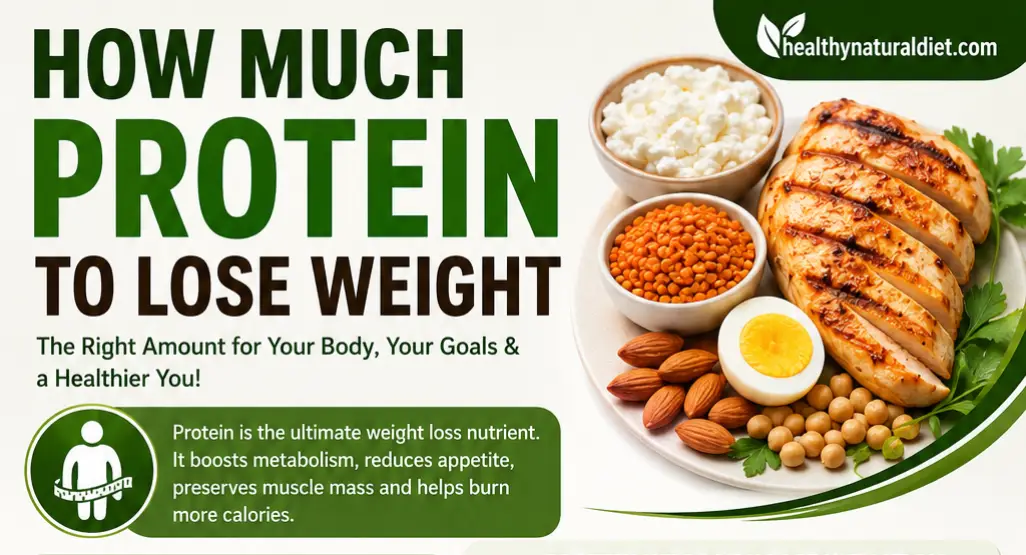
What protein actually does during weight loss
When you lose weight, you do not only lose fat. You lose some muscle alongside it, and how much depends heavily on what you eat and whether you use your muscles.
A systematic review pooling 47 studies found that higher protein intake significantly reduced muscle loss in adults with overweight or obesity who were losing weight. The analysis suggested that intakes above about 1.3 g/kg per day were associated with maintaining or increasing muscle mass, while intakes below 1.0 g/kg carried a higher risk of muscle decline.
This is the entire case for protein, and it is a strong one. Two people can lose the same 10 kilograms. One loses 8 kg of fat and 2 kg of muscle. The other loses 9.5 kg of fat and half a kilogram of muscle. The scale says the same thing. The bodies are not the same, and neither is what happens next.
Muscle is metabolically active tissue. Losing it makes maintaining your new weight harder, makes you weaker, and makes the next attempt tougher than the last. This is a large part of why repeated cycles of losing and regaining leave people worse off than when they started.
So the honest framing is not “eat protein to lose weight.” It is “eat protein so that what you lose is mostly fat.”
The other things protein does
Beyond muscle, three effects are worth knowing about.
It keeps you fuller. Protein has the strongest effect on satiety of the three macronutrients. Higher protein meals reduce how much people eat at the next meal. We go into the mechanisms in more detail in [internal: protein-satiety].
It costs more to digest. Your body spends energy processing food, and protein has the highest cost of the three, using roughly 20 to 30% of its own calories in digestion and metabolism compared with a much smaller fraction for carbohydrate and fat. Real, but small. This is a rounding error in your day, not a strategy.
It helps you stick with things. This is the underrated one. Adherence, not physiology, is the thing that separates diets that work from diets that do not. In the research on higher protein diets, the improvements showed up in people who actually followed the diet, and disappeared in people who did not. A way of eating that leaves you less hungry is one you are more likely to still be doing in six months.
How much protein you need
Here are the numbers, and the context they come from.
| Situation | Daily protein | Source |
| General adult requirement | 0.8 g/kg | RDA |
| Weight management | 1.2 to 1.6 g/kg | AJCN review |
| Regular resistance training | 1.4 to 2.0 g/kg | ISSN position stand |
| Training while in a calorie deficit | 2.3 to 3.1 g/kg | ISSN position stand |
| Healthy adults over 65 | 1.0 to 1.2 g/kg | ESPEN / PROT-AGE |
| Over 65 with chronic illness | 1.2 to 1.5 g/kg | ESPEN / PROT-AGE |
For a 70 kg adult managing their weight, 1.2 to 1.6 g/kg works out to roughly 85 to 110 grams a day.
Two practical notes. If you carry a lot of excess weight, calculating from your total body weight can produce a target that is unnecessarily high, because fat tissue does not have the same protein requirement as lean tissue. Using a goal weight, or a weight in the healthy range for your height, gives a more sensible number. And if you have kidney disease, none of these figures apply to you. Higher protein intakes are specifically contraindicated in some stages of chronic kidney disease, and that is a conversation for your renal team.
We break the calculation down further in how-much-protein-per-day.
What that looks like in food
Numbers on a page are abstract. Here is roughly what protein content looks like across common foods.
| Food | Portion | Protein |
| Chicken breast | 100 g | ~31 g |
| Greek yogurt, plain | 170 g pot | ~17 g |
| Lentils, cooked | 1 cup | ~18 g |
| Eggs | 2 large | ~13 g |
| Cottage cheese | 1/2 cup | ~14 g |
| Tofu, firm | 100 g | ~17 g |
| Canned tuna | 1 can, drained | ~25 g |
| Milk | 1 cup | ~8 g |
| Black beans, cooked | 1 cup | ~15 g |
| Almonds | 30 g | ~6 g |
You will notice how quickly this adds up once a couple of meals are built around a protein source, and how slowly it adds up when they are not. That is usually where the gap comes from. For a fuller list of animal sources, see our high-protein-meat-list.
Distribution matters more than most people realize
Most people eat very little protein at breakfast, a moderate amount at lunch, and a large amount at dinner. That pattern is common and it is not ideal.
Muscle protein synthesis, the process of your body actually building and repairing muscle tissue, responds to a meaningful dose of protein at a single sitting. Evidence suggests around 20 to 30 grams at one eating occasion is enough to maximize that response in most adults. Loading 60 grams into dinner does not produce twice the effect of 30.
So spreading protein across three or four meals gets more out of the same total. In practice, the single highest-value change most people can make is fixing breakfast, which is where the gap is usually largest. We cover that in high protein breakfast ideas.
Protein quality, briefly
Not all protein sources deliver the same amino acid profile. Animal sources generally contain all nine essential amino acids in useful proportions. Most individual plant sources are lower in one or more, and are also somewhat less digestible.
This matters less than the internet suggests. You do not need to combine complementary proteins within a single meal, which is an idea that persisted long after the research moved on. Eating a variety of plant proteins across the day covers the bases. What is true is that plant-based eaters generally need to pay more attention to total intake, because plant sources tend to carry less protein per serving vegetarian protein sources covers this properly.
What protein will not do
Given how protein is marketed, it is worth being clear about the limits.
It will not put you in a calorie deficit by itself. Protein has calories. Adding a shake to your existing diet without changing anything else adds calories to your day. Protein helps by displacing other foods and reducing hunger, not by being free.
It will not build muscle without resistance training. Protein is the raw material. Training is the signal. Without the signal, the raw material is largely surplus. This is the most common reason people increase protein and see nothing happen.
It will not target belly fat. Nothing does. Where your body draws fat from is determined by genetics, hormones, sex, and age, not by macronutrient choices. If you have seen otherwise, it was marketing.
More is not endlessly better. Beyond roughly 1.6 g/kg for weight management, the returns flatten out for most people who are not training hard. Very high intakes are not dangerous for healthy kidneys, despite decades of claims, but they are not doing much either.
Is high protein safe?
For people with normal kidney function, the evidence does not support the concern. The idea that high protein damages healthy kidneys comes largely from extrapolating findings in people who already had kidney disease.
Where caution genuinely applies: existing chronic kidney disease, where protein restriction is sometimes part of treatment, and a history of kidney stones, where intake should be discussed with a doctor. If either applies, do not act on general advice from an article, including this one.
The practical downsides of very high protein intakes are more mundane. Diets built heavily around protein at the expense of everything else tend to be low in fiber, which causes its own problems, and monotonous, which causes adherence problems.
Putting it together
If you want the whole thing in five lines:
- Aim for roughly 1.2 to 1.6 g/kg per day, calculated from a sensible body weight rather than your highest.
- Spread it across three or four meals rather than loading dinner.
- Get 20 to 30 g at each of those meals, breakfast included.
- Do some resistance training, or most of the muscle preservation benefit is wasted.
- Build meals around a protein source and let the rest of the plate follow.
That is the entire strategy. It is unglamorous, which is why nobody sells it.
Frequently asked questions
How much protein do I need to lose weight?
Research supports roughly 1.2 to 1.6 grams per kilogram of body weight per day, which is about 85 to 110 grams for a 70 kg adult. This range preserves lean mass during weight loss better than the standard 0.8 g/kg.
Does eating more protein burn more fat?
Not directly. Higher protein diets produce only slightly more weight loss than lower protein ones. The benefit is that more of what you lose is fat rather than muscle.
Can I eat too much protein?
For healthy kidneys, high intakes appear safe, but benefits flatten out above roughly 1.6 g/kg for most non-athletes. The practical risk is crowding out fiber and variety.
Do I need protein powder?
No. It is convenient, not necessary. See, Does whey protein make you gain weight?
What is the best time to eat protein?
Spread across three or four meals, with 20 to 30 g at each. Fixing breakfast helps most people more than anything else.
A note before you start counting
Protein targets are a useful tool and they can also become something else. If tracking food starts occupying more of your attention than you want it to, or the numbers begin feeling like rules you can fail at rather than a rough guide, that is worth noticing early.
Most people do fine building meals around a protein source without weighing anything. If your relationship with food is complicated, working from habits rather than numbers is usually the better route. In the US, the National Alliance for Eating Disorders helpline is 1-866-662-1235.

is a registered dietitian with over 15 years of experience in nutrition, personalised diet planning, and wellness coaching. She holds a Master’s degree in Nutritional Science from University of Dhaka and specialises in evidence-based nutrition strategies that support long-term health and sustainable lifestyle changes. Mounota regularly writes research-backed health and nutrition content for online publications and wellness platforms.
Leave a Reply